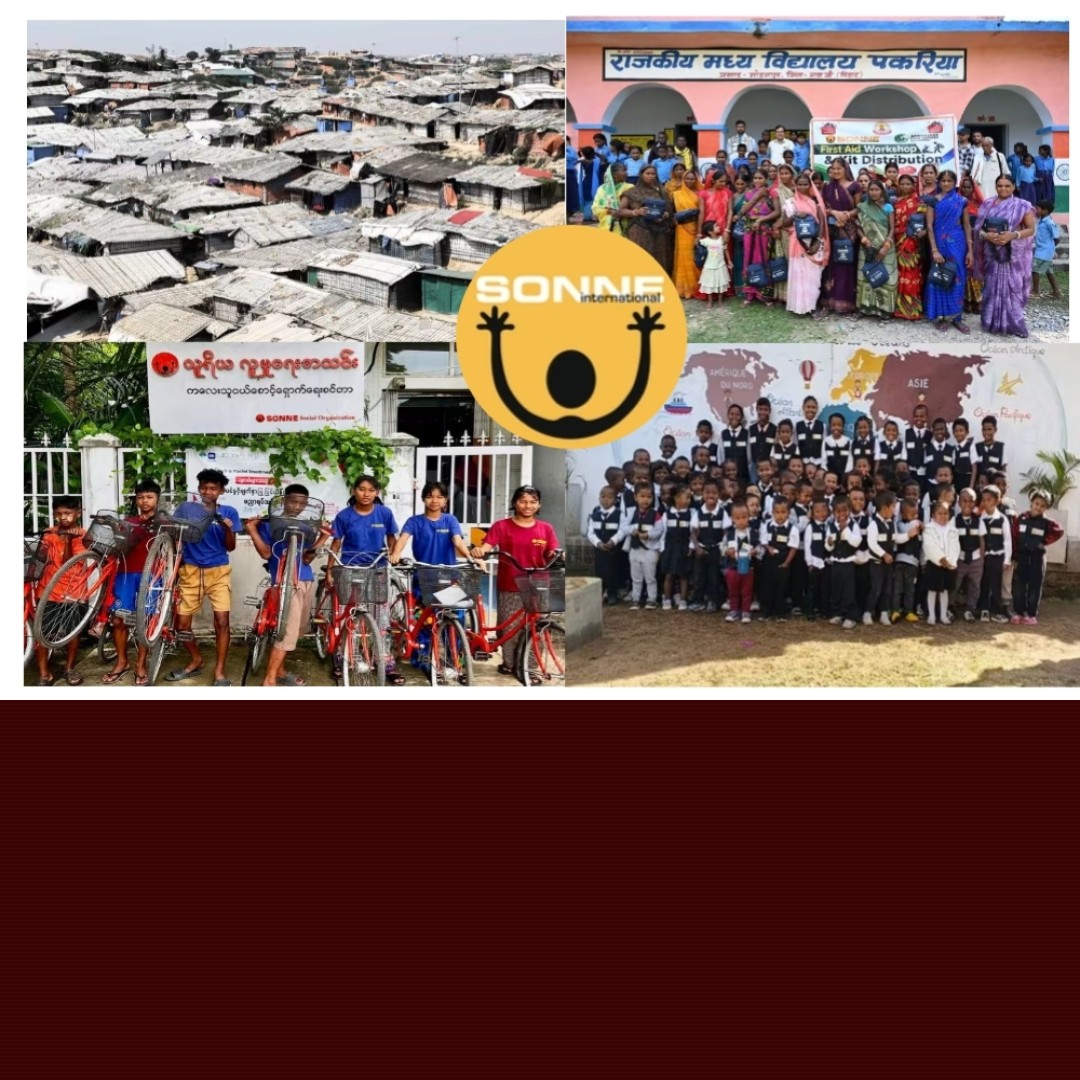
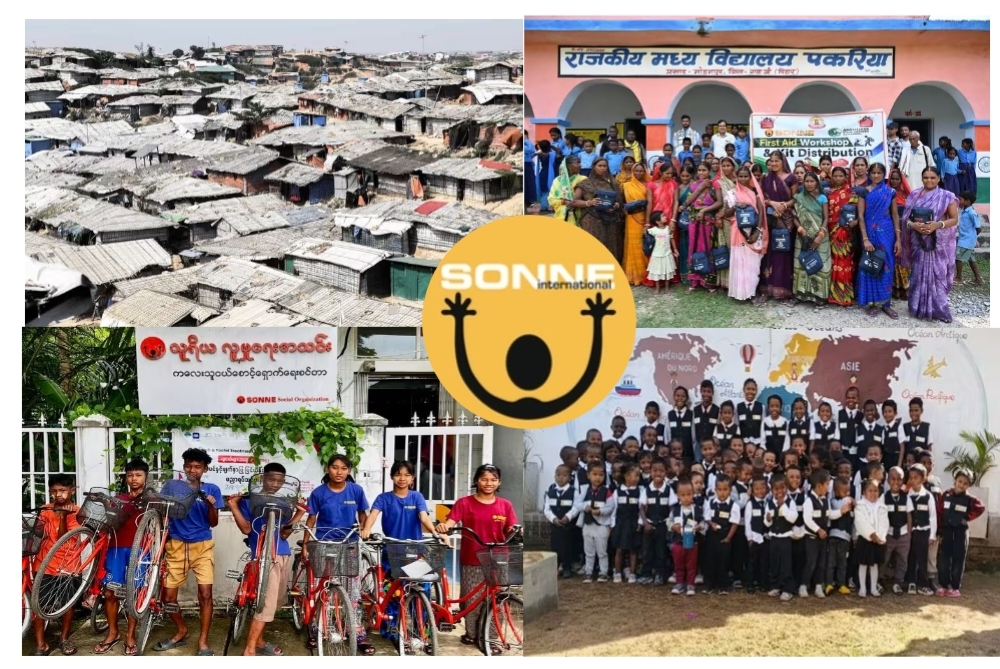


From remote communities and refugee camps to skills training for unemployed youth, the Austria-based NGO supports education, health, women’s empowerment and sustainable livelihoods
By Tawhidul Islam,
Austria-based international development organization SONNE-International has been working for more than two decades to improve the lives of disadvantaged people through education, health care, skills development, women’s empowerment, livelihood support and emergency humanitarian assistance.
According to the organization’s 2024 Annual Report, SONNE-International operates in five focus countries: Bangladesh, Ethiopia, India, Myanmar and Malawi. Its programs address different needs in each country, with education, health and women’s empowerment among its major areas of work.
Bangladesh: Education and Skills in Remote Communities
SONNE-International began working in Bangladesh in 2002, initially focusing on education for children from disadvantaged ethnic and remote communities.
In Bandarban’s Alikadam Upazila and Sherpur’s Jhenaigati area, the organization has supported schools and education programs. Its 2024 report lists 17 primary schools and two secondary schools, along with student dormitories and other education-related facilities.
The organization also provides computer training for unemployed and disadvantaged young people in Alikadam, Bandarban, helping them develop practical digital skills that can improve their access to employment and income-generating opportunities.
In addition, sewing, weaving and computer training programs have been used to strengthen the skills of women and young people. SONNE’s programs aim not only to provide immediate assistance but also to create opportunities for long-term self-reliance.
Support for Higher Education
SONNE-International also provides educational support to selected students pursuing higher education. According to its 2024 report, 45 young people were receiving such support, with two completing their studies during the year.
Health Services for Rohingya Refugees
Following the large-scale Rohingya refugee influx into Bangladesh in 2017, SONNE-International established health services in the Kutupalong area of Cox’s Bazar.
Its activities included medical consultations, health screening, vaccination-related services, family planning, maternal and child health support, health awareness and referrals for patients requiring advanced treatment.
The organization reported that its health center in Kutupalong served a large refugee population before its operation there ended in February 2025. Mobile health services for surrounding local communities have also been part of its Bangladesh programs.
Ethiopia: Mobile Health Care and Food Security
In Ethiopia, SONNE-International has worked in the Afar region since 2005, focusing particularly on semi-nomadic and pastoral communities.
Because many people live far from permanent health facilities, mobile health services play a central role. Programs include maternal and child health care, vaccination, prenatal and postnatal services, nutrition and health education.
The organization has also supported agriculture and food security as climate change and environmental pressures make traditional livestock-based livelihoods increasingly difficult. Women and men have received agricultural training, while women’s agricultural cooperatives have been supported with seeds, seedlings, fertilizer and solar-powered water systems.
Programs also address women’s health, women’s rights, child marriage and harmful practices such as female genital mutilation.
India: Free Education, Health Care and Women’s Skills
SONNE-International has worked in Bihar, India, since 2012. Its activities include free primary education, support for vulnerable children and assistance to surrounding communities.
The organization also operates a primary health center providing basic medical care and medicines. Health awareness, women’s health and access to clean water are among the related activities.
Women and young people receive computer and sewing training designed to improve their employment and income opportunities. Girls also participate in self-defense and karate training.
Myanmar: Support for Street Children and Displaced Families
SONNE-International began working in Myanmar in 2008, with programs concentrated in Yangon and surrounding areas.
Its activities include day-care services for disadvantaged and street-connected children, food, basic health care, education and assistance with school enrollment. Free tutoring and school supplies are also provided to children at risk of dropping out.
Mobile health teams serve people living in poor communities and displacement camps. The organization also provides sewing and computer training for young people and women, while emergency assistance helps vulnerable families affected by floods and other crises.
Earthquake Emergency Response
After the devastating earthquake in Myanmar on March 28, 2025, SONNE-International launched emergency assistance through local teams. Its reported response included food, clean water and hygiene supplies for affected communities, followed by support for rebuilding damaged homes.
Malawi: Keeping Girls in School
Malawi became one of SONNE-International’s focus countries in 2024. Its programs include education, girls’ empowerment, sports and self-defense training.
The organization has supported girls at risk of dropping out of school, including girls affected by child marriage. Assistance includes school fees, uniforms, educational materials and hygiene supplies.
Sports and self-defense activities are also being used to encourage girls’ participation, confidence and personal safety.
A Common Goal Across Five Countries
Although SONNE-International’s programs differ according to local needs, its work across Bangladesh, Ethiopia, India, Myanmar and Malawi focuses on improving access to education, health care, skills, livelihood opportunities and protection for disadvantaged communities.
From computer training for unemployed youth in the hills of Alikadam, to mobile health services in Ethiopia, medical support for Rohingya refugees in Bangladesh, education and health programs in India, assistance for vulnerable children in Myanmar and girls’ empowerment initiatives in Malawi, the organization combines humanitarian assistance with longer-term development efforts.
SONNE-International’s published reports show a development approach centered on helping disadvantaged communities gain greater access to education, health care, skills, economic opportunities and self-reliance.